Wednesday, October 29, 2014

Mr. Daniel Henninger

Daniel Henninger
The Wall Street Journal
October 2014

I am indeed reluctant to say that Henninger's beginnings are obscured by a black shroud of mystery, but I will assert the scarcity within what has become of his biographies. Even Wikipedia, the most renowned keeper of secrets, has but a few malnourished lines concerning Henninger's background. It is known that he was born in Cleveland, Ohio and attended the Edmund A. Walsh School of Foreign Service and succeeded academically. Since his graduation, Henninger has become the Deputy Editorial Page Director of the Wall Street Journal and has contributed greatly to Fox News. He is responsible for a column called "Wonder Land" and often reports on many political topics in his articles.

When it comes to specialization, Henninger embodies a professional journalist. Despite the fact his arguments consist mainly of mudslinging, he conducts rather convincing points and develops the column appropriately. Henninger is recognized by a wide spectrum of media, ranging from the Wall Street Journal to Fox News. Over the course of October 2014, he addressed large political topics concerning the American well-being and standard of living. Daniel Henninger makes note of the Ferguson-Missouri case, Obama's actions, recent economic depressions, and democratic party.
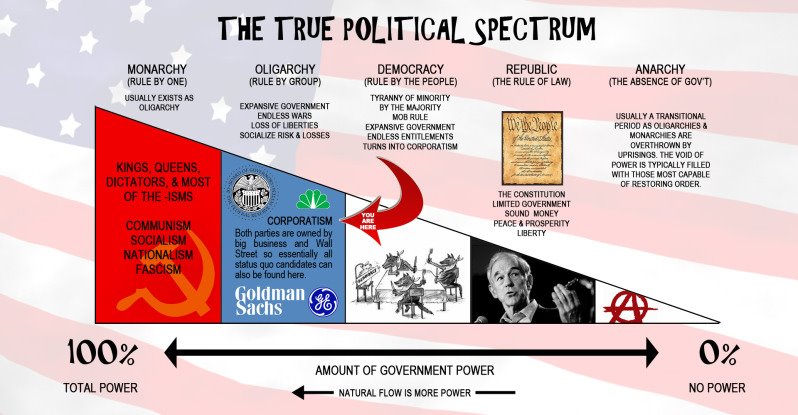
Henninger, from what I understand, is straddling the line between center right and radical right and with ample amounts of support to back this claim. Of the 4 articles I have seen, Henninger accuses Obama as lacking the professionalism of a true president and failing to address certain economic deficits. Sure, democrats too can turn a critical eye towards Obama, but Henninger's orientation becomes obvious with the hostility he directs towards the entire party. One of his most recent articles titled "It's not a Videogame" points a humiliating finger at the democratic party and characterizes them as disloyal, irresponsible, and unwilling to uphold national security.

Daniel Henninger, in the eyes of most radical republicans, is a valuable asset to the political party. However, as I see it, his association with Fox News really takes away from his credibility and reputation. Fox News is media that boasts of its unbias ("Fair and Balanced") but is quite notorious for its abuse of certain perspectives in contrast with others. For example, the station skewed the positive and negative coverage of the presidential candidates during the 2012 election. Henninger's association with this press plays into his reliability as an author. It may be possible to see skewed opinions and filtered ideologies as even he is recognized by Fox. For this reason, Henninger may be depicted as one of the less reputable in our list of pundits.

Sunday, October 26, 2014

Daniel Henninger's views on the Democratic Party (2:4)

It's Not a Videogame: After ISIS, can the Democrats be trusted with national security from 2016 to 2020?

http://online.wsj.com/articles/dan-henninger-its-not-a-videogame-1409179337

The Wall Street Journal. 27 August 2014
_________________________________________________________________________________

One of Daniel Henninger's most recent articles brings up the publicized beheading of James Foley, re-framing it as the foundation for the 2016 presidential election. His introduction is composed of many tragedies that line the pixels of our tablets, computers, and phones. Horrors such as Boko Haram's kidnappings and shootings in Russia give reason for his claim about how society and government has altered its views to combat a war-like world. Henninger gives a thorough analysis of reluctance and responsibility within authority despite its alignment. Sure, he says, foreign-policies are normal in the situation, but are severely lacking in effectiveness. Saudi Arabia is even reconsidering its partnership with the United States. Thus, prompting Henninger to ask the real question: can the Democratic party hold true to their responsibility and uphold national security? To answer the question, he takes into account certain democratic authorities that have failed to serve their role in national security in the past. Henninger concludes the piece with a statement that summarizes and answers his central contention.

The main idea is that democrats lack the necessary characteristics to retain a certain responsibility that concerns the nation's security. It is mainly supported through depictions of current events, their effects, and responses. Henninger's use of imagery really sets apart his appeal to pathos as it reinvents worldwide tragedies as something commonplace--two traits that should not go together. His framework, as it has been seen before, resembles that of a essay. To begin the column, worldwide news stirs a sense of interest among the audience. A brief analysis shortly ensues and is finalized by a question, which is then answered, although in the form of a thesis (conclusion).

Sunday, October 19, 2014

Daniel Henninger and an insight upon recent economic depressions (2:3)

A Year of Living on the Brink: Ebola, ISIS, Ukraine, a stock-market wipeout--there's nowhere to hide

http://online.wsj.com/articles/dan-henninger-a-year-of-living-on-the-brink-1413414887tesla=y&mg=reno64wsj&url=http://online.wsj.com/article/SB12555689437384833539804580216550709340506.html

The Wall Street Journal, 15 October 2014
_________________________________________________________________________________

Daniel Henninger's most recent post at the moment addresses certain issues that concern the well-being and securities of nations and continents. He introduces the piece with a brief reference to a book that supposedly predicted such tragedies, shortly following with an unfortunate reassurance of the fact that  [w]e're there, at the brink."  Then, Henninger develops the piece by elaborating upon what defines "the brink"; he mentions the Ebola outbreak, ISIS threat, Ukraine division, and recent stock-market failures. From this list, Henninger breaks down his perception of the recent economic depressions as they are a large result of the stock-market. In particular, he notes Obama's "failures" to stimulate the economy and compares his actions with many other historical, successful situations of economic growth. Henninger finalizes the piece with a line that closely resembles a literary claim and appears as some sort of call-to-action: political courage is severely lacking--our current president could be the reason why.

Henninger's central argument analyzes recent economic depressions and attributes them to fault decisions within our government. Much of his support derives from a multitude of statistics and similar historical situations. Because of Henninger's emphasis upon cold, hard facts, his logical appeal is the most prominent within the piece. When it comes to structuring this piece, Henninger organized it as though it was an argumentative essay, something I have seen before in his pieces. It begins with a rather grasping introduction, leads into a body of support, and ends with a claim.

Saturday, October 11, 2014

Daniel Henninger and his Criticism on Obama's Actions (2:2)

Obama's Limitless Government: The phrase, "change the laws on my own," is not in the U.S Constitution.

http://online.wsj.com/articles/dan-henninger-obamas-limitless-government-1412203893

The Wall Street Journal, 01 October 2014
_________________________________________________________________________________

Daniel Henninger demonstrates an anti-Obama attitude toward one of the statements our nation's leader recently made addressing the authority of the federal government. He sets forth an argument by stating it clearly as thesis in the introduction paragraph. Henninger elaborates upon Obama's careless extension of power as it applies to his perception of Obama's legal justification: "what difference does it make?" To outline and further develop the piece, Henninger supplies his argument with strong support, much of it derived from certain documented cases and personal opinions and quotations. From the central argument, he makes a brief digression addressing the extent to which federal authority will grow without some regulation. Henninger concludes the piece with the anxious emotions of the conservative party concerning Obama's authority.

Henninger's central contention, as mentioned before, revolves around the regulation of federal authority as it applies to certain abilities. The extent to which the government can exercise power is the main idea of the argument. Much of Henninger's support can be seen within his use of documented cases, personal opinions, and famous quotes. For example, he uses Obama's ability to "change the laws on his own" to bring forth the perception of an overly-powerful president. He also addresses several cases such as one judge's ruling in 2011 on off-shore drilling and one on a 2013 nuclear-waste case. For this reason, Henninger's appeal to logos is the most prominent within this post. It is quite undeniable that the piece is also structured like that of an argumentative essay. I could not help but notice the thesis, several forms of support, and conclusion he provided very clearly.

Sunday, October 5, 2014

Daniel Henninger's insight upon the Ferguson-Missouri Case (2:1)

Ferguson, USA: 50 years after the Civil Rights Act of 1964, a Ferguson doesn't need to happen.

http://online.wsj.com/articles/daniel-henninger-ferguson-usa-1408576137

The Wall Street Journal, 20 August 2014
_________________________________________________________________________________

Daniel Henninger, a writer for the Wall Street Journal, addresses the Ferguson-Missouri incident in his recent article concerning its strange timing. 50 years after the Civil Rights Act, Henninger writes, occurred this incident that is but a reflection of history. The rising racial tensions and rioting outbreaks took place in the streets of Detroit and Newark in the late 1960s, albeit on a much larger scale. Henninger investigates the crisis and delves into the question of why it happened: this transitions the piece into what feels like a lengthy digression. He targets education and its failure to suffice real-world needs as it is reflected by plummeting employment rates, especially within black youth. Henninger, in effort to convince his audience of the severity, sets forth several statistics drawn by a multitude of credible sources and studies. The author finalizes his piece with a supported claim revolving around the need for change within the classroom.

Henninger's central contention, although slightly obscured by the introduced topic, can be derived from the rhetorical question he proposes and analyzes: "Why don't more young guys in places like Ferguson have a job to occupy their days?" Much of his support can be seen within his appropriate use of quotes and statistics, often delivered from reliable sources such as Obama himself, the U.S Bureau of Labor Statistics, and the Pew Research Center. Henninger's numerous references to other studies indicates his appeal to logos and its prominence within the piece. To further his rhetorical strategy, his article almost follows Jolliffe's framework--it begins with the situation's exigence and purpose (in the form of a question) then transitions into his several appeals.