Monday, December 1, 2014

Mr. Fareed Zakaria

Fareed Zakaria
The Washington Post
November 2014

In 1964, Fareed Zakaria was born in Mumbai, India to Rafiq Zakaria, a Muslim politician, and Fatima Zakaria, an editor for one of the several Indian newspapers. He endured a pleasant, forgiving childhood under the tutelage of a wealthy family and school in Mumbai. Zakaria then made the decision to travel to the U.S for higher levels of education: Yale is held responsible for his Bachelor of Arts while Harvard offered him a P.h.D in Government. From his experience as a project manager at Harvard, Zakaria has moved on in pursuit of a greater career. For brief lapses in his life, he has taught at Columbia University, been the editor for several papers, and written several pieces. At the current moment, Zakaria publishes articles regularly for the New York Times, Wall Street Journal, and The Washington Post.

Fareed Zakaria has risen successfully from the most prestigious of schools and thus, attributes a sense of credibility to his own reputation. With a Bachelors from Yale and a P.h.D from Harvard, most other people will recognize this man as an authoritative speaker and hold him to great standards. Over the course of November 2014, Zakaria has made several notes regarding a multitude of both domestic and global events. He put Edward Snowden's return into perspective, elaborated upon a Chinese extension of power, and the extremist stereotype that threatens Islam.

Zakaria, according to Wikipedia, self-identifies as a centrist, in spite of what many others might assert. Forbes, an American magazine, labeled him as an influential liberal within media. However, Zakaria rebutted this assertion with a terse statement regarding his affiliations: "I feel that's part of
my job... which is not to pick sides but to explain what I think is happening on the ground." Personally, I find this incredibly respectable: prioritizing facts over opinions is indeed very important to informing the populations. Media should be held to standards that demand unbiased arguments.

However, each and every author has their flaws. Even he, I'm sure, must have slight bias. When it comes to his credibility, the debate rages on. Zakaria is clearly qualified for his field: he has several degrees, years of experience, and awards to show for it. In spite of these achievements, some gray areas have been spotted in his history. Zakaria has been accused of plagiarism once or twice in his career, a hefty crime especially for a writer. These controversies put into question his character and reliability. With that in mind, I would still rely upon Zakaria if he supports his argument thoroughly and discusses many facets to the topic.

Monday, November 24, 2014

Fareed Zakaria's Perspective on Islam (3:3)

Let's be Honest, Islam has a Problem Right Now

The Washington Post, 10 October 2014
_________________________________________________________________________________

One of Fareed Zakaria's most recent articles addresses a topic very sensitive for many American-muslims because it makes note of very scary generalizations. Zakaria begins the argument with several quotes from an author who makes exaggerations that put the Muslim world with the ISIS. To follow up and perhaps even reject the argument, Zakaria uses the idea of  1.6 billion Muslim followers, although spread out and varied. He does recognize recent terrorist attacks and their association with Islam but attributes them more to extremism. Zakaria draws sharp contrasts between inherent ideologies and misinterpreted ones. With this in mind, Zakaria refers back to the original quotations and focuses upon their faults, also making sure to give them advice for future situations.

Zakaria, in this piece, contends Maher's and Harris's most recent statements regarding Islam and a supposedly appropriate stereotype. To rhetorically analyze Zakaria's piece, I find it best to go chronologically. He provides an adamant rebuttal, beginning even within his title. His title, "Let's be Honest, Islam has a Problem Right Now," appeals to his own ethos as it demonstrates self-scrutiny and willingness to listen--it shows that Zakaria has made notes on either side of the argument. To further his rhetoric, he uses the basic statistics and quotes several credible sources, but he also uses strategies in particular. One that might stand out is the "cancer of extremism within Islam," figurative language to help visualize the point he is making. Throughout the piece, Zakaria makes several counterarguments based upon the original quotes, a form of concession-refutation. Another technique he uses actually damages his "opponent's" credibility in the lines: "Harris prides himself on being highly analytical--with a PhD, no less. I learned in graduate school that you can never explain a variable phenomenon with a fixed cause." Although subtle, he characterizes Harris as egotistical and even flawed. When it comes to structure, Zakaria's concession-refutation style dominates the article and creates its form. He capitalizes upon its advantages and reinforces many aspects of his overall appeal.

Sunday, November 16, 2014

Fareed Zakaria: A Chinese Extension of Power (3:2)

China's growing clout

The Washington Post, 13 November 2014
_________________________________________________________________________________

Fareed Zakaria's most recent post is introduced with a comparison of powers between the presence of Russia in worldwide politics and the passivity of China. From there, he leads into a very brief analysis of their inaction--the Chinese government is working with the American one to conquer the looming issue of global climate change. However, despite their agreement, Zakaria brings up the historical hostility China has held towards America, supporting the idea with several books and ideologies. He also takes note of a study conducted by the Christian Science Monitor and their view into anti-Western thoughts among Asians. With this in mind, Zakaria transitions into China's motion towards the progression of their economic prosperity, accounting for numerous organizations and renovations designed to structure financial success. Furthermore, he adds, China has been responsible for the exclusion of the U.S from several of its plans such as the "East Asia Summit" forum. Zakaria finalizes the column with a terse statement concerning a modern Cold War, a short, but powerful note to end on.

Zakaria's central contention regards China's pursuit of financial and economical superiority. Much of its support can be derived from his heavy analyses of recent actions made by the Chinese government and their goals. His methods of support utilize a fair amount of statistics. However, despite his abuse of many logical appeals, most of his rhetoric can also be seen both his appeal to logos and his appeal to pathos. At first glance, the appeal to pathos might strike a reader as almost irrelevant, but once taken into account Zakaria's exigence, it might become clearer: This newspaper, "The Washington Post," is made by an American company for American consumers. The underlying ideas behind this piece concern the U.S's inability to keep up with Chinese ambition--Zakaria's contrast inspires a sense of pursuit within Americans and even a small sense of failure.


Thursday, November 6, 2014

Fareed Zakaria: Edward Snowden's Second Chance (3:1)

Fareed Zakaria: Why Edward Snowden should agree to stand trial in the U.S

The Washington Post, 23 October 2014
_________________________________________________________________________________

Last week, The Washington Post brought up the cold Edward Snowden controversy and put his reunion with the U.S into perspective. Fareed Zakaria, the journalist who chose to write on the topic, introduced the piece with a recently released documentary of Snowden's background--possibly prompting him to claim such an argument. After taking into account his "crime," Zakaria questions whether or not it would be appropriate for Snowden to return and stand trial. This decision has sparked a number of heated debates all over the nation as it concerns the honesty and compromise of American courts. Zakaria draws from other sources to assert the claim that Snowden would indeed have a fair trial, which is met by the adamant rebuttal of Thomas Drake's case (another whistle blower). With such a firm counterargument, Zakaria finds evidence supporting international surveillance such as France's former minister confessing their sedition and Beijing hacking into other computer systems. To finalize the piece, Zakaria clarifies upon Obama's need to provide Snowden an open, civilian trial in the U.S. Doing otherwise would cost him his reputation and credibility of a president.

In meaning, Zakaria's column reassesses the situation of Edward Snowden, a former U.S security agent, and synthesizes an appropriate response to the "welcoming" arms of an American trial. The post relies heavily upon quotes from other sources consisting of professors, authors, and legal scholars. With this in mind, Zakaria furthers his appeal to logos with personal opinions derived from constitutional values and certain amendments. Despite his strong rational appeal, Zakaria draws credibility through his use of certain phrases. Take, for example, the phrase: "I say this as someone who believes that Snowden broke the law and should be held accountable but." Zakaria poses himself as someone who scrutinized Snowden's position and has taken many precautions in his decision. The prolonged phrase "I say this as someone who" could have easily been said through a simple "I," but Zakaria utilizes redundancy in such a manner that enhances his credibility. When it came to formatting his paper, Zakaria decided upon a rather focused (topic-wise) piece. The introduction was not lengthy whatsoever and also shows his eagerness to jump into the conflict. However, Zakaria put a heavy emphasis upon his conclusion as it plays a large role in his piece as the ultimate claim.

Wednesday, October 29, 2014

Mr. Daniel Henninger

Daniel Henninger
The Wall Street Journal
October 2014

I am indeed reluctant to say that Henninger's beginnings are obscured by a black shroud of mystery, but I will assert the scarcity within what has become of his biographies. Even Wikipedia, the most renowned keeper of secrets, has but a few malnourished lines concerning Henninger's background. It is known that he was born in Cleveland, Ohio and attended the Edmund A. Walsh School of Foreign Service and succeeded academically. Since his graduation, Henninger has become the Deputy Editorial Page Director of the Wall Street Journal and has contributed greatly to Fox News. He is responsible for a column called "Wonder Land" and often reports on many political topics in his articles.

When it comes to specialization, Henninger embodies a professional journalist. Despite the fact his arguments consist mainly of mudslinging, he conducts rather convincing points and develops the column appropriately. Henninger is recognized by a wide spectrum of media, ranging from the Wall Street Journal to Fox News. Over the course of October 2014, he addressed large political topics concerning the American well-being and standard of living. Daniel Henninger makes note of the Ferguson-Missouri case, Obama's actions, recent economic depressions, and democratic party.

Henninger, from what I understand, is straddling the line between center right and radical right and with ample amounts of support to back this claim. Of the 4 articles I have seen, Henninger accuses Obama as lacking the professionalism of a true president and failing to address certain economic deficits. Sure, democrats too can turn a critical eye towards Obama, but Henninger's orientation becomes obvious with the hostility he directs towards the entire party. One of his most recent articles titled "It's not a Videogame" points a humiliating finger at the democratic party and characterizes them as disloyal, irresponsible, and unwilling to uphold national security.

Daniel Henninger, in the eyes of most radical republicans, is a valuable asset to the political party. However, as I see it, his association with Fox News really takes away from his credibility and reputation. Fox News is media that boasts of its unbias ("Fair and Balanced") but is quite notorious for its abuse of certain perspectives in contrast with others. For example, the station skewed the positive and negative coverage of the presidential candidates during the 2012 election. Henninger's association with this press plays into his reliability as an author. It may be possible to see skewed opinions and filtered ideologies as even he is recognized by Fox. For this reason, Henninger may be depicted as one of the less reputable in our list of pundits.

Sunday, October 26, 2014

Daniel Henninger's views on the Democratic Party (2:4)

It's Not a Videogame: After ISIS, can the Democrats be trusted with national security from 2016 to 2020?

http://online.wsj.com/articles/dan-henninger-its-not-a-videogame-1409179337

The Wall Street Journal. 27 August 2014
_________________________________________________________________________________

One of Daniel Henninger's most recent articles brings up the publicized beheading of James Foley, re-framing it as the foundation for the 2016 presidential election. His introduction is composed of many tragedies that line the pixels of our tablets, computers, and phones. Horrors such as Boko Haram's kidnappings and shootings in Russia give reason for his claim about how society and government has altered its views to combat a war-like world. Henninger gives a thorough analysis of reluctance and responsibility within authority despite its alignment. Sure, he says, foreign-policies are normal in the situation, but are severely lacking in effectiveness. Saudi Arabia is even reconsidering its partnership with the United States. Thus, prompting Henninger to ask the real question: can the Democratic party hold true to their responsibility and uphold national security? To answer the question, he takes into account certain democratic authorities that have failed to serve their role in national security in the past. Henninger concludes the piece with a statement that summarizes and answers his central contention.

The main idea is that democrats lack the necessary characteristics to retain a certain responsibility that concerns the nation's security. It is mainly supported through depictions of current events, their effects, and responses. Henninger's use of imagery really sets apart his appeal to pathos as it reinvents worldwide tragedies as something commonplace--two traits that should not go together. His framework, as it has been seen before, resembles that of a essay. To begin the column, worldwide news stirs a sense of interest among the audience. A brief analysis shortly ensues and is finalized by a question, which is then answered, although in the form of a thesis (conclusion).

Sunday, October 19, 2014

Daniel Henninger and an insight upon recent economic depressions (2:3)

A Year of Living on the Brink: Ebola, ISIS, Ukraine, a stock-market wipeout--there's nowhere to hide

http://online.wsj.com/articles/dan-henninger-a-year-of-living-on-the-brink-1413414887tesla=y&mg=reno64wsj&url=http://online.wsj.com/article/SB12555689437384833539804580216550709340506.html

The Wall Street Journal, 15 October 2014
_________________________________________________________________________________

Daniel Henninger's most recent post at the moment addresses certain issues that concern the well-being and securities of nations and continents. He introduces the piece with a brief reference to a book that supposedly predicted such tragedies, shortly following with an unfortunate reassurance of the fact that  [w]e're there, at the brink."  Then, Henninger develops the piece by elaborating upon what defines "the brink"; he mentions the Ebola outbreak, ISIS threat, Ukraine division, and recent stock-market failures. From this list, Henninger breaks down his perception of the recent economic depressions as they are a large result of the stock-market. In particular, he notes Obama's "failures" to stimulate the economy and compares his actions with many other historical, successful situations of economic growth. Henninger finalizes the piece with a line that closely resembles a literary claim and appears as some sort of call-to-action: political courage is severely lacking--our current president could be the reason why.

Henninger's central argument analyzes recent economic depressions and attributes them to fault decisions within our government. Much of his support derives from a multitude of statistics and similar historical situations. Because of Henninger's emphasis upon cold, hard facts, his logical appeal is the most prominent within the piece. When it comes to structuring this piece, Henninger organized it as though it was an argumentative essay, something I have seen before in his pieces. It begins with a rather grasping introduction, leads into a body of support, and ends with a claim.

Saturday, October 11, 2014

Daniel Henninger and his Criticism on Obama's Actions (2:2)

Obama's Limitless Government: The phrase, "change the laws on my own," is not in the U.S Constitution.

http://online.wsj.com/articles/dan-henninger-obamas-limitless-government-1412203893

The Wall Street Journal, 01 October 2014
_________________________________________________________________________________

Daniel Henninger demonstrates an anti-Obama attitude toward one of the statements our nation's leader recently made addressing the authority of the federal government. He sets forth an argument by stating it clearly as thesis in the introduction paragraph. Henninger elaborates upon Obama's careless extension of power as it applies to his perception of Obama's legal justification: "what difference does it make?" To outline and further develop the piece, Henninger supplies his argument with strong support, much of it derived from certain documented cases and personal opinions and quotations. From the central argument, he makes a brief digression addressing the extent to which federal authority will grow without some regulation. Henninger concludes the piece with the anxious emotions of the conservative party concerning Obama's authority.

Henninger's central contention, as mentioned before, revolves around the regulation of federal authority as it applies to certain abilities. The extent to which the government can exercise power is the main idea of the argument. Much of Henninger's support can be seen within his use of documented cases, personal opinions, and famous quotes. For example, he uses Obama's ability to "change the laws on his own" to bring forth the perception of an overly-powerful president. He also addresses several cases such as one judge's ruling in 2011 on off-shore drilling and one on a 2013 nuclear-waste case. For this reason, Henninger's appeal to logos is the most prominent within this post. It is quite undeniable that the piece is also structured like that of an argumentative essay. I could not help but notice the thesis, several forms of support, and conclusion he provided very clearly.

Sunday, October 5, 2014

Daniel Henninger's insight upon the Ferguson-Missouri Case (2:1)

Ferguson, USA: 50 years after the Civil Rights Act of 1964, a Ferguson doesn't need to happen.

http://online.wsj.com/articles/daniel-henninger-ferguson-usa-1408576137

The Wall Street Journal, 20 August 2014
_________________________________________________________________________________

Daniel Henninger, a writer for the Wall Street Journal, addresses the Ferguson-Missouri incident in his recent article concerning its strange timing. 50 years after the Civil Rights Act, Henninger writes, occurred this incident that is but a reflection of history. The rising racial tensions and rioting outbreaks took place in the streets of Detroit and Newark in the late 1960s, albeit on a much larger scale. Henninger investigates the crisis and delves into the question of why it happened: this transitions the piece into what feels like a lengthy digression. He targets education and its failure to suffice real-world needs as it is reflected by plummeting employment rates, especially within black youth. Henninger, in effort to convince his audience of the severity, sets forth several statistics drawn by a multitude of credible sources and studies. The author finalizes his piece with a supported claim revolving around the need for change within the classroom.

Henninger's central contention, although slightly obscured by the introduced topic, can be derived from the rhetorical question he proposes and analyzes: "Why don't more young guys in places like Ferguson have a job to occupy their days?" Much of his support can be seen within his appropriate use of quotes and statistics, often delivered from reliable sources such as Obama himself, the U.S Bureau of Labor Statistics, and the Pew Research Center. Henninger's numerous references to other studies indicates his appeal to logos and its prominence within the piece. To further his rhetorical strategy, his article almost follows Jolliffe's framework--it begins with the situation's exigence and purpose (in the form of a question) then transitions into his several appeals.

Monday, September 29, 2014

Mr. Boris Johnson


Boris Johnson
Telegraph and The Guardian
September 2014

Despite being a European politician, Boris Johnson was born in New York City in 1964. It is noted that he was a rather timid child, a trait probably attributed to his severe deafness for which he later received treatment.  He and his family returned to Britain so that his mother could finish her education at Oxford university. While there, Johnson attended the varying levels of schooling at the European School in Brussels and succeeded academically. From there, he attended Oxford University and received a 2:1 UK degree, meaning that he passed with the second highest academic merit. Following his educational career as a student, Johnson pursued journalism for a brief period of his history before moving towards politics. In 2001, he was elected as a Member of the Parliament: since then, Johnson has become a prominent member of European politics as he is currently the mayor of London.

When talking about the most raw, literal form of "specialty," it is clear that Boris Johnson is "specialized" in the Classics, given that he has a degree in it. Being that he is very involved in modern, European politics, one can assume that Johnson has some knowledge when it comes to management.

Over the course of September 2014, Boris Johnson covered several topics, mainly addressing large concerns such as the James Foley incident, the Scottish referendum, and his "guilty until proven innocent" policy as well as a smaller argument concerning the creation of a new airport.

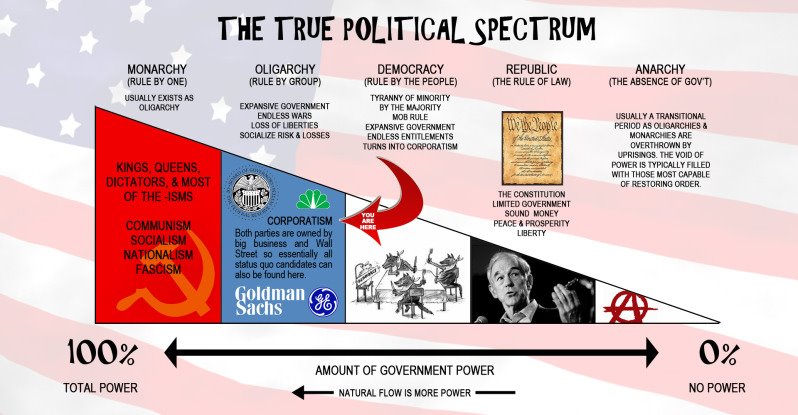
Democrats and Republicans: An overview WORKSHEETJohnson, being a conservative, is center-right on the political spectrum that spans the width from anarchy to harsh socialism. He states it quite explicitly and with a sense of pride, referring to the party as the "great conservative family." Furthermore, a large percentage of conservatives are hostile to the European Union or are known as "euroskeptics," which he categorizes himself under during his post concerning the Scottish independence.

Boris Johnson is clearly qualified for what he does. As the mayor of London, he has quite the reputation among the British people. He came from a rather aristocratic background and received a fitting education for what he has pursued and is doing currently. Involved heavily in politics, Johnson deserves the popularity that is given to him. His opinion is definitely valuable as it may pertain to the future of London and possibly impact the entirety of Europe.

Monday, September 22, 2014

British Decapitation accompanying Scotland's Independence (1:4)

Scottish independence: Decapitate Britain, and we kill off the greatest political union ever
The Scots are on the verge of an act of self-mutilation that will trash our global identity

http://www.telegraph.co.uk/news/uknews/scotland/11080893/Scottish-independence-Decapitate-Britain-and-we-kill-off-the-greatest-political-union-ever.html

The Telegraph, 08 September 2014
_________________________________________________________________________________

With global attention pinpointed on the UK's Scotland, it was only a matter of time before the British Boris Johnson asserted forth his position on the subject. To introduce the piece, Johnson emphasizes its severity with a most definitely extreme and far-fetched idea: "In just 10 days' time we could all be walking around like zombies."Then, he transitions into the consequences, those primarily directed towards British financial and moral ties to Scotland, emphasizing the topic's asperity by relating it to the American revolution--Scotland is not a colony of Britain but a piece of it. Johnson takes this idea one step further through its personification. Imagine the UK as a person, he says. Take Scotland from it and you would have decapitated the nations, scalped them perhaps. After implanting such a horrific image into his audience's head, Johnson elaborates upon the effectiveness, punctuality, and beauty of British culture. He argues that losing Scotland would take away part of their prevalent fame, as many of their global popularity can be attributed to magnificent Scottish scientists and inventors who capitalized upon British utilities. Johnson finalizes his stance with brief conclusion statements that idealize the current state of the modern UK.\

Johnson's central contention in this piece is not obscured or in any way subtle: Scottish independence would ultimately lead to detriment. Much of his support is derived from his excessive use of emotional appeal and historical events. Johnson makes several references to the companionship developed between Britain and Scotland through Act of Union of 1707 and the strength of their relationship by relating it to the American colonies in 1776. His historical dependence for arguments is reassuring and illustrates the extent to which he understands the ties between the two. He appeals to logic through one statistic and one geographical analysis, but it is so insignificant in comparison to his appeal to pathos that it is a bit overwhelmed. With a deliberate focus upon emotions, Johnson exercises the use of metaphors, a "call-to-arms" type of optimism ("Britain, British, Britishness: these are precious terms, and they stand for something wonderful across the world"), and their shared lifestyles.

Sunday, September 14, 2014

Reconsidering Poland and Membership in the EU (1:3)

The barabaric events the pushed Poland into the arms of the EU: As Britain reconsiders its role in Europe, it's important to remember our allies' suffering

http://www.telegraph.co.uk/news/worldnews/11009429/The-barbaric-events-that-pushed-Poland-into-the-arms-of-the-EU.html

The Telegraph, 03 August 2014
_________________________________________________________________________________

As a prominent member of European politics, Boris Johnson has many thoughts concerning Poland's membership within the EU. To begin his argument, Johnson pushes upon his audience a brief history of European conflict, dating back as far as World War II. It starts with the horrific visuals of a mechanical manslaughter during the Warsaw Uprising. Following his restatement of European history, Johnson immerses himself and his audience into the thoughts of the contemporary politicians. It was only appropriate to welcome Poland into the EU: their membership seemingly promised a border-less, more whole Europe. However, 70 years later, the modern day Union has begun experiencing economic repercussions and therefore reconsidered Poland's position within the EU. With this in mind, Johnson, a "euroskeptic," questions the future of the EU and contemplates Poland's willingness to stay within it. He makes slight indications that the British are exiting the Union, slowly but surely nonetheless.

Johnson's column is a blunt indication of his position as a Euroskeptic through the medium that is Poland's membership. His central contention revolves around this idea as he constantly exploits the flaws within the EU. Johnson uses history as support, standard for most politicians and those involved with law. From it, he derives the many reasons for Poland's introduction to the EU and its growing financial problems. The most outstanding of Johnson's rhetorical strategies lies within his emotional appeal, backed up by a solid cause and effect style structure. Take, for example, the introduction paragraph to his article: it addresses the systematic slaughter of thousands of Polish, using staggering numbers to reinforce its effect. To further his argument, Johnson arouses suspicion of the EU's future. He first gives reason for Poland's inauguration to the group and then details its heavy weight through statistics (it is granted 12 billion Euros a year), following up with the criticism of the unreformed Union. Johnson's primary tools used in his column revolve around a cause and effect structure and an appeal to pathos backed by statistics.

Sunday, September 7, 2014

Boris Johnson's perspective on a third runway at Heathrow (1:2)

Only with a new hub airport will Britain truly take off: It's madness to reopen the debate about a third runway at Heathrow. A new site is the answer.

http://www.telegraph.co.uk/news/uknews/11066917/Only-with-a-new-hub-airport-will-Britain-truly-take-off.html

The Telegraph, 01 September 2014
_________________________________________________________________________________

With the quality of his citizen's lives at stake, Boris Johnson can not help but publicize his stance on the creation of a new runway at the Heathrow airport. He introduces the topic with its detriments summarized in three, brief stabs of a phrase: the debate is "an act so self-defeating, so short-termist, and so barbarically contemptuous of the rights of the population." Johnson argues that those living under the flight paths will suffer greater consequences with this new runway. Noise pollution is inevitable with this plan and it might even take form as medical problems such as stress or heart diseases. To further his claim, he asserts that a third runway would not appease such a need for development and might even encourage the construction of another. Thus, with a firm grasp on its flaws, Johnson proposes that the construction of an entire new airport is only apt for the situation. A relocation would have many benefits: noise pollution would punish less people and a more convenient spot could offer less travel.

Boris Johnson, in this column, addresses the discrepancy concerning the creation of a new runway in the Heathrow airport, making sure to add in his own perspective on the matter. His proposed solution disregards the new runway and indicates the need for a new airport. Johnson support is intertwined with his rhetorical strategies. He has statistics in nearly every paragraph, ranging from noise pollution measurements (55 decibels) to job opportunities (336,000) to, of course, monetary values (92.1 billion Euros per year). Such staggering numbers serve to catch the reader's eye and persuade them to think in his favor.  A crucial piece of Johnson's article is its concession-and-refutation style structure. He introduces the piece as an argument and exploits its flaw, following up with his own, seemingly perfect solution to the problem: he begins with the scheduled dispute and analyzes the potential detriments of the new runway. Shortly after, Johnson suggests an alternate resolution, the creation of an entire new hub. This strategy is even exercised upon re-evaluating his own solution: "there are some technical difficulties, sure: but TfL and our consultants are certain that neither fog nor birds nor the SS Montgomery present anything remotely approaching a deal-breaker to a country that used to have a reputation as the greatest engineering nation on earth." Johnson, with such strong stance on the topic, has demonstrated a great deal of self-criticism and meticulous judgment.

Monday, September 1, 2014

Boris Johnson's "guilty until proven innocent" policy (1:1)

Do nothing, and we invite the tide of terror to our front door: As the problem of Isil worsens by the day, it is surely time to bring back control orders

http://www.telegraph.co.uk/news/uknews/defence/11054093/Do-nothing-and-we-invite-the-tide-of-terror-to-our-front-door.html
The Telegraph, 24 August 2014

Boris Johnson calls for 'guilty until proven innocent' for suspected terrorists: Mayor of London says 'minor' law chance should reverse presumption of innocence for those who travel to Iraq and Syria

The Guardian, Guardian News, 24 August 2014
http://www.theguardian.com/politics/2014/aug/25/boris-johnson-britons-visiting-iraq-syria-presumed-terrorists
_________________________________________________________________________________

Boris Johnson, following the execution of American journalist James Foley, put a spin on the Bill of Right's presumption of innocence through a rearrangement of its wording: the Britons who travel to Syria and Iraq, without a notification sent to the government, should be considered "guilty until proven innocent." Johnson, to further his assertion, emphasizes the need to capture or kill the jihadist responsible for the journalist's death. In his elaboration of the concept of "guilty until proven innocent," Johnson said that "anyone visiting those countries would be automatically presumed to be terrorists unless they had notified the authorities in advance." He has supported the idea of stripping British citizenship in the case of the violation of this travel restriction. In doing so, Johnson targets the Islamic State and the jihadists reponsible for Foley's death. He is a great opponent of terrorism and has indicated his intention to mitigate their advancement.

Boris Johnson's contention is not as much of a disagreement of an idea as it is an assertion concerning his own new policy and perspective on terrorism. It focuses primarily upon Johnson's "guilty until proven innocent" policy on emigrating Britons and the desperate need to exterminate jihadists like the one responsible for James Foley's death. He supports his central theme by using statistics (such as their population of 6 million and their military strength) and constant reminders of their terrorism (hostile terminology). Johnson uses many strategies to develop his argument, such as rhetorical questions ("Does Washington have the will? Do we?") and the use of antagonistic terminology when referring to terrorism.Johnson also uses the first person plural, part of its rhetorical framework, to create the idea that the British are a unified force (emotional appeal) fighting against a shared hostility.